Showing posts with label organic. Show all posts

Saturday, May 4, 2013

Organic Pest Control Remedies

MILK
Milk is effective against a range of mildews on peas, pumpkins and cucumber leaves. Use equal parts milk and water and spray every couple of days until the mildew is under control. If the mildew is out of control remove the affected leaves to avoid the mildew from spreading and do not water at night, try watering in the mornings.


MOLASSES SPRAY
Molasses is a good deterrent sticky spray, ideal for cabbage moths and grubs. Blend 1 tablespoon of molasses with 1 liter of hot water until the color of weak tea, then mix in one tea spoon of detergent, which will help the molasses to stick to the leaves, spray top and under side of the leaves. You could also add vinegar to this brew to make it more potent.


VINEGAR SPRAY
For cabbage moths and grubs. Blend 1/4 vinegar with 3/4 of water, then mix in one tea spoon of detergent, which will help the vinegar to stick to the grubs, bugs and leaves of the plant, spray top and under side of the leaves. You can also add molasses to this brew.
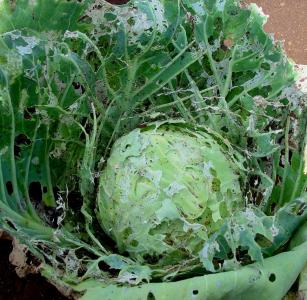

Severe damage done by a cabbage moth. 


CHAMOMILE TEA
Is a mild fungicide. Pour boiling water over a chamomile tea bag, leave to steep for ten minutes, when cool use as a spray.


VEGETABLE OIL
Spray recipe: Mix 1 tbsp of liquid soap with 1 cup of vegetable oil. Dilute as required using 1-2.5 tsp of the mixture to 1 cup of water. Oil sprays can cause burning when applied to sensitive plants. If in doubt, test a plant sample first and wait 2-3 days to see if burning results. Oil sprays can also cause burning if applied when shade temperatures exceed 29 degrees Celsius or when applied within 4 weeks of a sulfur spray such as wettable sulfur or lime sulfur. 


PURE SOAP
Pure soap when mixed with water can be used as a natural insecticide for the control of some sap-sucking insect pests, including aphids and mealy bugs. It is a contact insecticide and works by breaking down the insect’s exoskeleton, causing it to dehydrate and die.


CURE FOR WHITE/BLACK SPOT (mildew)
Add *1 liter of FULL fat milk to an *8 liter watering can, watered on Roses or mildew attracting plants, will kill white/black spots.  


SCALES
Make the oil spray by blending two cups of vegetable oil with one cup of pure liquid soap, and mix it until it turns white.
Dilute one tablespoon of the emulsion to one liter of water and spray all affected areas thoroughly. Do this during mild weather, because if it’s hot it may burn the plant’s leaves.
Scales shoot a sweet substance called honeydew. Ants literally farm the scale to feed on the honeydew. They’ll pick them up and they’ll move them all over the tree. Honeydew also leads to sooty mold, a black dusty fungus that grows over the leaves and stems. Controlling the scale will also get rid of the sooty mold.


To keep APHIDS and OTHER PESTS off your Roses: Finely chop 1 onion and 2 medium cloves of garlic. Put ingredients into a blender with 2 cups of water and blend on high. Strain out pulp. Pour liquid into spray bottle. Spray a fine mist on rose bushes, making sure to coat both tops and bottoms of leaves.


GENERAL PESTICIDE
3 hot green peppers (canned or fresh) 2 or 3 cloves garlic 3/4 tsp liquid soap 3 cups water Puree the peppers and garlic cloves in a blender. Pour into a spray bottle and add the liquid soap and water. Let stand 24 hours. Strain out pulp and spray onto infested plants, making sure to coat both tops and bottoms of leaves.


ORGANIC BUG SPRAY FROM ONION SCRAPS
You can make your own organic bug spray from kitchen leftovers! Simply save your onion skins, peels and ends then refrigerate in an empty margarine-sized tub or ziplock bag until the container is full. Once you have enough, place the onion pieces in a pail and fill with warm water. Soak for a few days, up to a week. You can keep this on the patio in the sun to steep but this is optional. After one week, strain the onion bits out and store the onion water in spray bottles.


Photo Credit: Australian Organic Gardening


AGAINST INSECT PESTS
1. Soapy water (NOT detergent). Try to find one based on caustic potash, rather than caustic soda and mix well with water until frothy (you’ll need more soap in hard water areas). For aphids and other soft-shelled insects
2. Oil sprays suffocate insects. Boil 1 kg soap with 8L of oil, stirring until dissolved. Dilute 1:20 with water just before use. Spray on cool days only.
3. Tomato leaf spray (very poisonous). Cover leaves with water, boil and cool. Use immediately as a general insecticide.
4. Wormwood spray. Infuse leaves in boiling water and leave for a few hours. Dilute 1:4 and use for sap-sucking insects.
5. Chilli spray – equal volumes chilli and water blended and sprayed fresh onto caterpillars. (Prevent contact with eyes and skin.)
6. Lapsang Souchong tea – a strong brew (1 tbsp in a pot) deters possums from nipping rose tips.


Creative Commons License
This work by Little Mom on the Prairie is licensed under a Creative Commons Attribution-NonCommercial-NoDerivs 3.0 Unported License.

Wednesday, April 24, 2013

Going Green in the Garden: Helpful Tips to Get Started

Not only is going green in the garden better for your wallet, it is a great idea if you are worried about pesticides, GMO foods or if you are trying to help the planet by eating locally. Plus, it is a fun and educational experience for kids and adults alike! Not to put too much of a hippy-dippy spin on things, but my daughter and I love the feel of dirt in our hands, feeling like we are "one with nature" and bonding in the process. It is something special we share.  

Composting doesn't have to be a big commitment. Even a small bucket of well-tended compost can make a big impact in a garden, and cut down on kitchen waste. (Photo credit: Kitty meets Goat)

1. Compost
Kitchen scraps, coffee grinds, grass clippings… composting will reduce your garbage and produce an excellent fertilizer to mix in with your garden soil.

2. Use a Rain Barrel
Capture rain water in a rain barrel, a great clean source you can use to water all of your potted plants and gardens, even a small lawn.

3. Attract Helpful Critters
Build a bird and bug paradise to attract these critters to your garden.  Local birds and many critters (like spiders and bees) are helpful in controlling the pest population naturally, as well as helping to pollinate your fruit trees and flowers.

4. Grow Native Plants
Native plants are naturally more pest and disease resistant.  They grow well with less maintenance and are very often instrumental in attracting beneficial creatures of all sorts.  Find out what plants are native to your area and scatter your favorites throughout the garden. They also tend to use less water!

5. Mulch With Natural Mulches
Mulch is an easy way to retain moisture in the soil, which will help you to conserve water usage.  It’s also a handy way to combat weeds and when you use natural mulch, it will breakdown into the soil and fertilize the area over time. It is also known to discourage several types of garden pests. 

6. Use a Push Mower
Cut down your power or gas usage and get some exercise with a push lawn mower.  Sometimes called a reel mower, these do an excellent job on your lawn and are powered by none other than you. It is also a handy way to get your teen to get some exercise!

7. Try Companion Planting
Companion plants are those that pair well together, forming a natural barrier against pests and weeds. It is also helpful to know what types of plants should not be grown together. 

8. Use All Natural Bug Spray
Find a good organic insecticidal soap or mix up something yourself using natural liquid soap, horticultural oils and water.  Add to a spritzer and spray onto infected foliage.

9. Use Natural Pot Materials
Using things like paper, stone or clay for your pots is a great way to make a green container garden. 

 10. Try Square Foot Gardening
 When paired with companion gardening, this is touted by many avid gardeners as the most efficient way to grow your own.


Creative Commons License
This work by Little Mom on the Prairie is licensed under a Creative Commons Attribution-NonCommercial-NoDerivs 3.0 Unported License.

Wednesday, November 14, 2012

Homemade Spa Day! DIY Olive Oil Sugar Scrub for Hands, Face and Entire Body!


I LOVE smooth, soft skin...harder to come by in the winter! People always ask me what my secret is, and I tell them 
"Olive oil sugar scrub - Head to toe!"

Olive oil is amazing...it is good for your health (and delicious on pasta) but did you know it can also be good for your skin? This is especially true if you have extremely dry skin or are allergic to topical creams and lotions. Olive oil is one of those magical substances that is good for almost everything--your nutritional health, your hands and nails, and your hair,too! It might even protect your skin against sun damage and cancer. Use Extra Virgin Olive oil because it doesn't clog your pores.

Be careful when applying, though -- olive oil might be good for your skin, but it's not so good for fabrics.

Sugar crystals are formed in a way that is MUCH less abrasive to skin than salt (I used to break out horribly after using a salt scrub!) and will slough off dead skin without scratching. 

For Hands: 
Pour 1-2 tablespoons of sugar into one hand. Pour about the same amount of Olive Oil into same hand. Rub the mixture in between your palms to combine and then spread it all over your hands. Working in circular motions all over your hands, scrub off all that dead skin!


For Face: 
I recommend pulling your hair back (if long) and adding a headband regardless of hair length - keep all the wispies away from the oil! Add 1-2 tablespoons of sugar into one hand. Pour about the same amount of Olive Oil into same hand and rub together between your palms. Slather this all over your face. Try to not go to crazy with the scrubbing, or else you’ll end up looking like you got hit in the face (red and raw) or have been crying.  Be gentle, use circular motions and be gentle. (No, not a typo... I mean it ~ with ANY face scrub, be gentle!)


For Entire Body: 
Add 1/2 cup sugar to a small bowl. Add in olive oil (approx. 1/4 cup, you want the mix to be wet but not so wet the sugar doesn't do its job). While in the shower or tub, rub the mixture in between your palms to combine and then spread it all over your body. Work in circular motions and remove the dead skin from arms, legs, everywhere! Rinse thoroughly with warm water and make sure to rinse your tub completely - this stuff can be slippery!


Creative Commons License
This work by Little Mom on the Prairie is licensed under a Creative Commons Attribution-NonCommercial-NoDerivs 3.0 Unported License.