
MILK
Milk is effective against a range of
mildews on peas, pumpkins and cucumber leaves. Use equal parts milk and
water and spray every couple of days until the mildew is under control.
If the mildew is out of control remove the affected leaves to avoid the
mildew from spreading and do not water at night, try watering in the
mornings.
MOLASSES SPRAY
Molasses is a good deterrent sticky
spray, ideal for cabbage moths and grubs. Blend 1
tablespoon of molasses with 1 liter of hot water until the color of
weak tea, then mix in one tea spoon of detergent, which will help the
molasses to stick to the leaves, spray top and under side of the leaves.
You could also add vinegar to this brew to make it more potent.
VINEGAR SPRAY
For cabbage moths and grubs. Blend 1/4 vinegar with 3/4 of water, then mix in one tea
spoon of detergent, which will help the vinegar to stick to the grubs,
bugs and leaves of the plant, spray top and under side of the leaves.
You can also add molasses to this brew.
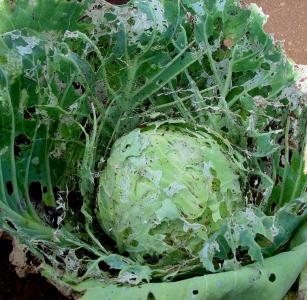 | ||||||
| Severe damage done by a cabbage moth. |
CHAMOMILE TEA
Is a mild fungicide. Pour boiling water over a chamomile tea bag, leave to steep for ten minutes, when cool use as a spray.
VEGETABLE OIL
Spray recipe: Mix 1 tbsp of liquid soap
with 1 cup of vegetable oil. Dilute as required using 1-2.5 tsp of the
mixture to 1 cup of water. Oil sprays can cause burning when applied to
sensitive plants. If in doubt, test a plant sample first and wait 2-3
days to see if burning results. Oil sprays can also cause burning if
applied when shade temperatures exceed 29 degrees Celsius or when
applied within 4 weeks of a sulfur spray such as wettable sulfur or lime sulfur.
PURE SOAP
Pure soap when mixed
with water can be used as a natural insecticide for the control of some
sap-sucking insect pests, including aphids and mealy bugs. It is a
contact insecticide and works by breaking down the insect’s exoskeleton,
causing it to dehydrate and die.
CURE FOR WHITE/BLACK SPOT (mildew)
Add *1 liter of FULL fat milk to an *8 liter watering can, watered on Roses or mildew attracting plants, will kill white/black spots.
SCALES
Make the oil spray by blending two cups of vegetable oil with one cup of pure liquid soap, and mix it until it turns white.
Dilute one tablespoon of the emulsion to
one liter of water and spray all affected areas thoroughly. Do this
during mild weather, because if it’s hot it may burn the plant’s leaves.
Scales shoot a sweet substance called
honeydew. Ants literally farm the scale to feed on the honeydew. They’ll
pick them up and they’ll move them all over the tree. Honeydew also
leads to sooty mold, a black dusty fungus that grows over the leaves
and stems. Controlling the scale will also get rid of the sooty mold.
To keep APHIDS and OTHER PESTS off your Roses: Finely chop 1 onion and 2 medium cloves of garlic. Put
ingredients into a blender with 2 cups of water and blend on high.
Strain out pulp. Pour liquid into spray bottle. Spray a fine mist on
rose bushes, making sure to coat both tops and bottoms of leaves.
GENERAL PESTICIDE
3 hot green peppers (canned or fresh) 2
or 3 cloves garlic 3/4 tsp liquid soap 3 cups water Puree the peppers
and garlic cloves in a blender. Pour into a spray bottle and add the
liquid soap and water. Let stand 24 hours. Strain out pulp and spray
onto infested plants, making sure to coat both tops and bottoms of
leaves.
You can make your own organic bug spray from kitchen leftovers! Simply save your onion skins, peels and ends then refrigerate in an empty margarine-sized tub or ziplock bag until the container is full. Once you have enough, place the onion pieces in a pail and fill with warm water. Soak for a few days, up to a week. You can keep this on the patio in the sun to steep but this is optional. After one week, strain the onion bits out and store the onion water in spray bottles.
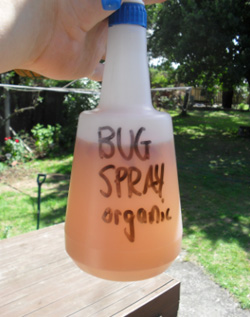 |
| Photo Credit: Australian Organic Gardening |
AGAINST INSECT PESTS
1.
Soapy water (NOT detergent). Try to find one based on caustic potash,
rather than caustic soda and mix well with water until frothy (you’ll
need more soap in hard water areas). For aphids and other soft-shelled
insects
2. Oil sprays
suffocate insects. Boil 1 kg soap with 8L of oil, stirring until
dissolved. Dilute 1:20 with water just before use. Spray on cool days
only.
3. Tomato leaf spray (very poisonous). Cover leaves with water, boil and cool. Use immediately as a general insecticide.
4. Wormwood spray. Infuse leaves in boiling water and leave for a few hours. Dilute 1:4 and use for sap-sucking insects.
5. Chilli spray –
equal volumes chilli and water blended and sprayed fresh onto
caterpillars. (Prevent contact with eyes and skin.)
6. Lapsang Souchong tea – a strong brew (1 tbsp in a pot) deters possums from nipping rose tips.

This work by Little Mom on the Prairie is licensed under a Creative Commons Attribution-NonCommercial-NoDerivs 3.0 Unported License.


